
- Track every order
- Save books to your wishlist
- Earn rewards on every order
- All Available Copies
- Overview
- About the Author
- Awards
- Professional Reviews
- Reader Reviews
- Table Of Contents
- Borrow
Overview
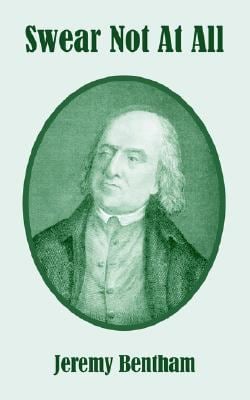
Originally published in 1813 and written to expose the mischief arising from the laws relating to the administration of oaths. In some cases, so he declared, the Promissory Oath prevented a man from doing what he knew to be right; in others, it afforded him a ready excuse for the commission of some wrong. George III laid on his Coronation Oath the responsibility of the American War and of his resistance to the claims of the Catholics. He had sworn to maintain his dominions entire; he had sworn to preserve the Church of England. At Oxford, barbers, cooks, bedmakers, errand boys, and other unlettered retainers to the University were habitually sworn in English to the observance of a medley of statutes penned in Latin - the oath thus solemnly taken but never kept. On matriculating, he had himself been excused from taking the oaths by reason of his tender years; and this relieved him from a state of very painful doubt, for even then he felt strong objections against needless swearing. Bentham did not, however, regard Assertory or Judicial Oaths as open to the same serious objections; but, while recognizing the necessity of some formal sanction, he did not approve of the ceremony being made a sacred invocation, for that was apt to obscure the real mischief of judicial falsehood - the mischief occasioned by the lie. If criminality be centered in the profanation of the ceremony, who is to say whether the sanction for truth be in operation or not? Who can say what are the religious opinions hidden in the breast of the witness? First went ordeal, he writes; then went duel; after that went, under the name of wager of law, the ceremony of an oath in its pure state; by-and-by this last of the trainof supernatural powers, ultima cIlicolfm, will be gathered with AstrFa into its native skies.
Jeremy. Bentham
Jeremy Bentham was born in London, on February 15, 1748, the son of an attorney. He was admitted to Queen's College, Oxford, at age 12 and graduated in 1763. He had his master's degree by 1766 and passed the bar exam in 1769. An English reformer and political philosopher, Bentham spent his life supporting countless social and political reform measures and trying as well to create a science of human behavior. He advocated a utopian welfare state and designed model cities, prisons, schools, and so on, to achieve that goal. He defined his goal as the objective study and measurement of passions and feelings, pleasures and pains, will and action. The principle of "the greatest happiness of the greatest number," set forth in his Introduction to the Principles of Morals and Legislation, governed all of his schemes for the improvement of society, and the philosophy he devised, called utilitarianism, set a model for all subsequent reforms based on scientific principles. Bentham also spoke about complete equality between the sexes, law reform, separation of church and state, the abolition of slavery, and animal rights. Bentham died on June 6, 1832, at the age of 84 at his residence in Queen Square Place in Westminster, London. He had continued to write up to a month before his death, and had made careful preparations for the dissection of his body after death and its preservation as an auto-icon.
Categories
All Available Copies Find out more about shipping times from these sellers.
| Condition | Price | |||
|---|---|---|---|---|
|
eBook Obtain a digital book from our friends at eBooks.com.
|
{{ebooksDotComPrice}} {{ebooksDotComCurrency}} | eBooks.com | Digital edition from eBooks.com | |
|
Audio Book Obtain a digital book from our friends at AudiobooksNow.com.
|
{{audioBooksNowPrice}} {{audioBooksNowCurrency}} | AudiobooksNow.com | Digital edition from AudiobooksNow.com |
| Find at your local library from our friends at WorldCat | Find Libraries |
Overview
Originally published in 1813 and written to expose the mischief arising from the laws relating to the administration of oaths. In some cases, so he declared, the Promissory Oath prevented a man from doing what he knew to be right; in others, it affor ...
Read full overview
Overview
Originally published in 1813 and written to expose the mischief arising from the laws relating to the administration of oaths. In some cases, so he declared, the Promissory Oath prevented a man from doing what he knew to be right; in others, it afforded him a ready excuse for the commission of some wrong. George III laid on his Coronation Oath the responsibility of the American War and of his resistance to the claims of the Catholics. He had sworn to maintain his dominions entire; he had sworn to preserve the Church of England. At Oxford, barbers, cooks, bedmakers, errand boys, and other unlettered retainers to the University were habitually sworn in English to the observance of a medley of statutes penned in Latin - the oath thus solemnly taken but never kept. On matriculating, he had himself been excused from taking the oaths by reason of his tender years; and this relieved him from a state of very painful doubt, for even then he felt strong objections against needless swearing. Bentham did not, however, regard Assertory or Judicial Oaths as open to the same serious objections; but, while recognizing the necessity of some formal sanction, he did not approve of the ceremony being made a sacred invocation, for that was apt to obscure the real mischief of judicial falsehood - the mischief occasioned by the lie. If criminality be centered in the profanation of the ceremony, who is to say whether the sanction for truth be in operation or not? Who can say what are the religious opinions hidden in the breast of the witness? First went ordeal, he writes; then went duel; after that went, under the name of wager of law, the ceremony of an oath in its pure state; by-and-by this last of the trainof supernatural powers, ultima cIlicolfm, will be gathered with AstrFa into its native skies.
Product Details
About the Author
Jeremy. Bentham
Jeremy Bentham was born in London, on February 15, 1748, the son of an attorney. He was admitted to Queen's College, Oxford, at age 12 and graduated in 1763. He had his master's degree by 1766 and passed the bar exam in 1769. An English reformer and political philosopher, Bentham spent his life supporting countless social and political reform measures and trying as well to create a science of human behavior. He advocated a utopian welfare state and designed model cities, prisons, schools, and so on, to achieve that goal. He defined his goal as the objective study and measurement of passions and feelings, pleasures and pains, will and action. The principle of "the greatest happiness of the greatest number," set forth in his Introduction to the Principles of Morals and Legislation, governed all of his schemes for the improvement of society, and the philosophy he devised, called utilitarianism, set a model for all subsequent reforms based on scientific principles. Bentham also spoke about complete equality between the sexes, law reform, separation of church and state, the abolition of slavery, and animal rights. Bentham died on June 6, 1832, at the age of 84 at his residence in Queen Square Place in Westminster, London. He had continued to write up to a month before his death, and had made careful preparations for the dissection of his body after death and its preservation as an auto-icon.
All Available Copies
| Condition | Source | Price | |
|---|---|---|---|
|
eBook Obtain a digital book from our friends at eBooks.com.
|
Digital edition from eBooks.com | {{ebooksDotComPrice}} {{ebooksDotComCurrency}} | eBooks.com |
|
Audio Book Obtain a digital book from our friends at AudiobooksNow.com.
|
|
{{audioBooksNowPrice}} {{audioBooksNowCurrency}} | Audiobook |
Limited Preview for 'Swear Not at All' provided by Archive.org
*This is a limited preview of the contents of this book and does not directly represent the item available for sale.*
A preview for 'Swear Not at All' is unavailable.
You are now leaving the Better World Books website to complete your transaction. Your eBook download will be facilitated by our friends at eBooks.com. Thank you for your support and for shopping with Better World Books!
You are now leaving the Better World Books website to complete your transaction. Your audio book download will be facilitated by our friends at AudiobooksNow.com. Thank you for your support and for shopping with Better World Books!
You are now leaving the Better World Books website. Thank you for your support and for shopping with Better World Books!