
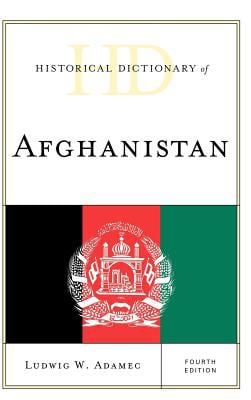
Historical Dictionary of Afghanistan
Hardcover
Historical Dictionary of Afghanistan
Hardcover
- All Available Copies
- Overview
- About the Author
- Awards
- Professional Reviews
- Reader Reviews
- Table Of Contents
- Borrow
Overview
Afghanistan has long been a coveted land of great strategic importance. Early in its history it served as a gateway to India, impinging on the ancient Silk Road, which carried trade from the Mediterranean to China. In the 16th century the Persian Safavid Empire in the west, the Turkic Uzbek state to the north, and the Moghul Empire of India disputed control of the area, and soon after the founding of the state of Afghanistan in 1747, Russia and Great Britain left the country as a buffer between the two empires. During the second half of the 20th century, it became an arena of conflict in the Cold War between the United States and the Soviet Union and in the 1990s, the establishment of a radical Islamist regime in Kabul threatened to make the country the base of an Islamist world revolution. Most recently, spurred on by the attacks of September 11th, American intervention brought an end to the radical Taliban regime and led to the election of President Hamid Karzai in 2004 and his reelection in 2009. The fourth edition of the Historical Dictionary of Afghanistan contains substantial new material to reflect the rapid changes in the region. This is done through a chronology, an introductory essay, an expansive bibliography, and over 1,000 cross-referenced dictionary entries on significant persons, events, places, organizations, and other aspects of Afghanistan history from the earliest times to the present. This book is an excellent access point for students, researchers, and anyone wanting to know more about Afghanistan. >The fourth edition of the Historical Dictionary of Afghanistan contains substantial new material to reflect the rapid changes in the region. This is done through a chronology, an introductory essay, an expansive bibliography, and over 1,000 cross-referenced dictionary entries on significant persons, events, places, organizations, and other aspects of Afghanistan history from the earliest times to the present. This book is an excellent access point for students, researchers, and anyone wanting to know more about Afghanistan.>The fourth edition of the Historical Dictionary of Afghanistan contains substantial new material to reflect the rapid changes in the region. This is done through a chronology, an introductory essay, an expansive bibliography, and over 1,000 cross-referenced dictionary entries on significant persons, events, places, organizations, and other aspects of Afghanistan history from the earliest times to the present. This book is an excellent access point for students, researchers, and anyone wanting to know more about Afghanistan.>The fourth edition of the Historical Dictionary of Afghanistan contains substantial new material to reflect the rapid changes in the region. This is done through a chronology, an introductory essay, an expansive bibliography, and over 1,000 cross-referenced dictionary entries on significant persons, events, places, organizations, and other aspects of Afghanistan history from the earliest times to the present. This book is an excellent access point for students, researchers, and anyone wanting to know more about Afghanistan.rs, and anyone wanting to know more about Afghanistan.
Categories
All Available Copies Find out more about shipping times from these sellers.
| Condition | Price | |||
|---|---|---|---|---|
|
eBook Obtain a digital book from our friends at eBooks.com.
|
{{ebooksDotComPrice}} {{ebooksDotComCurrency}} | eBooks.com | Digital edition from eBooks.com | |
|
Audio Book Obtain a digital book from our friends at AudiobooksNow.com.
|
{{audioBooksNowPrice}} {{audioBooksNowCurrency}} | AudiobooksNow.com | Digital edition from AudiobooksNow.com |
Professional Reviews
"graveyard of empires"--may help explain the need for a fourth edition of this title (3rd ed., CH, Apr''04, 41-4384; 2nd ed., CH, Feb''98, 35-3081; 1st ed., CH, Jun''92, 29-5413). Adamec (emer., Univ. of Arizona) has written more than two-dozen historical and political works on this often violently contested land. Similar to the format of other works in the
"Historical Dictionary" series, this volume primarily contains an A-Z dictionary covering history, politics, geography, institutions, and culture, in addition to prominent contemporary and historical figures, among numerous other topics. The editor notes that
"hundreds of added or substantially revised entries" are featured in this latest, hefty edition. A mostly brief chronology spans the country''s history since its earliest times, but the emphasis is primarily on recent times. The appendixes feature some interesting primary documents, and the introduction provides a short but useful overview of Afghanistan....This work is a superb ready-reference source suitable for major academic and public libraries. It will also be useful for smaller libraries that might not own the earlier editions. Summing Up: Recommended. Lower-level undergraduates and above; general readers." -- Choice Reviews
"The first substantive section of this dictionary is a chronology of events which goes up to March 2011. Next is a concise introduction on the geography, people, religion, and history of Afghanistan. While there is mention of Afghan ties to Ariana (1500 B.C.E.), the historical analysis focuses on the early nineteenth century onwards, with special consideration for events leading up to the Soviet occupation and its aftermath. The same focus is true for the dictionary of terms. This is in line with the work''s stated scope to concentrate ''on the political history of contemporary Afghanistan.'' Following the dictionary are appendixes, which outline major terms of the Durand Agreement, Taliban Codex, Rules for Political Parties, Durrani genealogy, and a thematically arranged bibliography. . . . In conclusion,Historical Dictionary of Afghanistan is an excellent starting point for scholars and general readers interested in contemporary political Afghanistan." -- American Reference Books Annual hasis is primarily on recent times. The appendixes feature some interesting primary documents, and the introduction provides a short but useful overview of Afghanistan....This work is a superb ready-reference source suitable for major academic and public libraries. It will also be useful for smaller libraries that might not own the earlier editions. Summing Up: Recommended. Lower-level undergraduates and above; general readers." -- Choice Reviews
"The first substantive section of this dictionary is a chronology of events which goes up to March 2011. Next is a concise introduction on the geography, people, religion, and history of Afghanistan. While there is mention of Afghan ties to Ariana (1500 B.C.E.), the historical analysis focuses on the early nineteenth century onwards, with special consideration for events leading up to the Soviet occupation and its aftermath. The same focus is true for the dictionary of terms. This is in line with the work''s stated scope to concentrate ''on the political history of contemporary Afghanistan.'' Following the dictionary are appendixes, which outline major terms of the Durand Agreement, Taliban Codex, Rules for Political Parties, Durrani genealogy, and a thematically arranged bibliography. . . . In conclusion,Historical Dictionary of Afghanistan is an excellent starting point for scholars and general readers interested in contemporary political Afghanistan." -- American Reference Books Annual istory of contemporary Afghanistan.'' Following the dictionary are appendixes, which outline major terms of the Durand Agreement, Taliban Codex, Rules for Political Parties, Durrani genealogy, and a thematically arranged bibliography. . . . In conclusion,Historical Dictionary of Afghanistan is an excellent starting point for scholars and general readers interested in contemporary political Afghanistan." -- American Reference Books Annual hasis is primarily on recent times. The appendixes feature some interesting primary documents, and the introduction provides a short but useful overview of Afghanistan....This work is a superb ready-reference source suitable for major academic and public libraries. It will also be useful for smaller libraries that might not own the earlier editions. Summing Up: Recommended. Lower-level undergraduates and above; general readers." -- Choice Reviews
"The first substantive section of this dictionary is a chronology of events which goes up to March 2011. Next is a concise introduction on the geography, people, religion, and history of Afghanistan. While there is mention of Afghan ties to Ariana (1500 B.C.E.), the historical analysis focuses on the early nineteenth century onwards, with special consideration for events leading up to the Soviet occupation and its aftermath. The same focus is true for the dictionary of terms. This is in line with the work''s stated scope to concentrate ''on the political history of contemporary Afghanistan.'' Following the dictionary are appendixes, which outline major terms of the Durand Agreement, Taliban Codex, Rules for Political Parties, Durrani genealogy, and a thematically arranged bibliography. . . . In conclusion,Historical Dictionary of Afghanistan is an excellent starting point for scholars and general readers interested in contemporary political Afghanistan." -- American Reference Books Annual hasis is primarily on recent times. The appendixes feature some interesting primary documents, and the introduction provides a short but useful overview of Afghanistan....This work is a superb ready-reference source suitable for major academic and public libraries. It will also be useful for smaller libraries that might not own the earlier editions. Summing Up: Recommended. Lower-level undergraduates and above; general readers." -- Choice Reviews
"The first substantive section of this dictionary is a chronology of events which goes up to March 2011. Next is a concise introduction on the geography, people, religion, and history of Afghanistan. While there is mention of Afghan ties to Ariana (1500 B.C.E.), the historical analysis focuses on the early nineteenth century onwards, with special consideration for events leading up to the Soviet occupation and its aftermath. The same focus is true for the dictionary of terms. This is in line with the work''s stated scope to concentrate ''on the political history of contemporary Afghanistan.'' Following the dictionary are appendixes, which outline major terms of the Durand Agreement, Taliban Codex, Rules for Political Parties, Durrani genealogy, and a thematically arranged bibliography. . . . In conclusion,Historical Dictionary of Afghanistan is an excellent starting point for scholars and general readers interested in contemporary political Afghanistan." -- American Reference Books Annual istory of contemporary Afghanistan.'' Following the dictionary are appendixes, which outline major terms of the Durand Agreement, Taliban Codex, Rules for Political Parties, Durrani genealogy, and a thematically arranged bibliography. . . . In conclusion,Historical Dictionary of Afghanistan is an excellent starting point for scholars and general readers interested in contemporary political Afghanistan." -- American Reference Books Annual istory of contemporary Afghanistan.'' Following the dictionary are appendixes, which outline major terms of the Durand Agreement, Taliban Codex, Rules for Political Parties, Durrani genealogy, and a thematically arranged bibliography. . . . In conclusion,Historical Dictionary of Afghanistan is an excellent starting point for scholars and general readers interested in contemporary political Afghanistan." -- American Reference Books Annual hasis is primarily on recent times. The appendixes feature some interesting primary documents, and the introduction provides a short but useful overview of Afghanistan....This work is a superb ready-reference source suitable for major academic and public libraries. It will also be useful for smaller libraries that might not own the earlier editions. Summing Up: Recommended. Lower-level undergraduates and above; general readers." -- Choice Reviews
"The first substantive section of this dictionary is a chronology of events which goes up to March 2011. Next is a concise introduction on the geography, people, religion, and history of Afghanistan. While there is mention of Afghan ties to Ariana (1500 B.C.E.), the historical analysis focuses on the early nineteenth century onwards, with special consideration for events leading up to the Soviet occupation and its aftermath. The same focus is true for the dictionary of terms. This is in line with the work''s stated scope to concentrate ''on the political history of contemporary Afghanistan.'' Following the dictionary are appendixes, which outline major terms of the Durand Agreement, Taliban Codex, Rules for Political Parties, Durrani genealogy, and a thematically arranged bibliography. . . . In conclusion,Historical Dictionary of Afghanistan is an excellent starting point for scholars and general readers interested in contemporary political Afghanistan." -- American Reference Books Annual istory of contemporary Afghanistan.'' Following the dictionary are appendixes, which outline major terms of the Durand Agreement, Taliban Codex, Rules for Political Parties, Durrani genealogy, and a thematically arranged bibliogra
| Find at your local library from our friends at WorldCat | Find Libraries |
Overview
Afghanistan has long been a coveted land of great strategic importance. Early in its history it served as a gateway to India, impinging on the ancient Silk Road, which carried trade from the Mediterranean to China. In the 16th century the Persian Saf ...
Read full overview
Overview
Afghanistan has long been a coveted land of great strategic importance. Early in its history it served as a gateway to India, impinging on the ancient Silk Road, which carried trade from the Mediterranean to China. In the 16th century the Persian Safavid Empire in the west, the Turkic Uzbek state to the north, and the Moghul Empire of India disputed control of the area, and soon after the founding of the state of Afghanistan in 1747, Russia and Great Britain left the country as a buffer between the two empires. During the second half of the 20th century, it became an arena of conflict in the Cold War between the United States and the Soviet Union and in the 1990s, the establishment of a radical Islamist regime in Kabul threatened to make the country the base of an Islamist world revolution. Most recently, spurred on by the attacks of September 11th, American intervention brought an end to the radical Taliban regime and led to the election of President Hamid Karzai in 2004 and his reelection in 2009. The fourth edition of the Historical Dictionary of Afghanistan contains substantial new material to reflect the rapid changes in the region. This is done through a chronology, an introductory essay, an expansive bibliography, and over 1,000 cross-referenced dictionary entries on significant persons, events, places, organizations, and other aspects of Afghanistan history from the earliest times to the present. This book is an excellent access point for students, researchers, and anyone wanting to know more about Afghanistan. >The fourth edition of the Historical Dictionary of Afghanistan contains substantial new material to reflect the rapid changes in the region. This is done through a chronology, an introductory essay, an expansive bibliography, and over 1,000 cross-referenced dictionary entries on significant persons, events, places, organizations, and other aspects of Afghanistan history from the earliest times to the present. This book is an excellent access point for students, researchers, and anyone wanting to know more about Afghanistan.>The fourth edition of the Historical Dictionary of Afghanistan contains substantial new material to reflect the rapid changes in the region. This is done through a chronology, an introductory essay, an expansive bibliography, and over 1,000 cross-referenced dictionary entries on significant persons, events, places, organizations, and other aspects of Afghanistan history from the earliest times to the present. This book is an excellent access point for students, researchers, and anyone wanting to know more about Afghanistan.>The fourth edition of the Historical Dictionary of Afghanistan contains substantial new material to reflect the rapid changes in the region. This is done through a chronology, an introductory essay, an expansive bibliography, and over 1,000 cross-referenced dictionary entries on significant persons, events, places, organizations, and other aspects of Afghanistan history from the earliest times to the present. This book is an excellent access point for students, researchers, and anyone wanting to know more about Afghanistan.rs, and anyone wanting to know more about Afghanistan.
Product Details
Professional Reviews
"graveyard of empires"--may help explain the need for a fourth edition of this title (3rd ed., CH, Apr''04, 41-4384; 2nd ed., CH, Feb''98, 35-3081; 1st ed., CH, Jun''92, 29-5413). Adamec (emer., Univ. of Arizona) has written more than two-dozen historical and political works on this often violently contested land. Similar to the format of other works in the
"Historical Dictionary" series, this volume primarily contains an A-Z dictionary covering history, politics, geography, institutions, and culture, in addition to prominent contemporary and historical figures, among numerous other topics. The editor notes that
"hundreds of added or substantially revised entries" are featured in this latest, hefty edition. A mostly brief chronology spans the country''s history since its earliest times, but the emphasis is primarily on recent times. The appendixes feature some interesting primary documents, and the introduction provides a short but useful overview of Afghanistan....This work is a superb ready-reference source suitable for major academic and public libraries. It will also be useful for smaller libraries that might not own the earlier editions. Summing Up: Recommended. Lower-level undergraduates and above; general readers." -- Choice Reviews
"The first substantive section of this dictionary is a chronology of events which goes up to March 2011. Next is a concise introduction on the geography, people, religion, and history of Afghanistan. While there is mention of Afghan ties to Ariana (1500 B.C.E.), the historical analysis focuses on the early nineteenth century onwards, with special consideration for events leading up to the Soviet occupation and its aftermath. The same focus is true for the dictionary of terms. This is in line with the work''s stated scope to concentrate ''on the political history of contemporary Afghanistan.'' Following the dictionary are appendixes, which outline major terms of the Durand Agreement, Taliban Codex, Rules for Political Parties, Durrani genealogy, and a thematically arranged bibliography. . . . In conclusion,Historical Dictionary of Afghanistan is an excellent starting point for scholars and general readers interested in contemporary political Afghanistan." -- American Reference Books Annual hasis is primarily on recent times. The appendixes feature some interesting primary documents, and the introduction provides a short but useful overview of Afghanistan....This work is a superb ready-reference source suitable for major academic and public libraries. It will also be useful for smaller libraries that might not own the earlier editions. Summing Up: Recommended. Lower-level undergraduates and above; general readers." -- Choice Reviews
"The first substantive section of this dictionary is a chronology of events which goes up to March 2011. Next is a concise introduction on the geography, people, religion, and history of Afghanistan. While there is mention of Afghan ties to Ariana (1500 B.C.E.), the historical analysis focuses on the early nineteenth century onwards, with special consideration for events leading up to the Soviet occupation and its aftermath. The same focus is true for the dictionary of terms. This is in line with the work''s stated scope to concentrate ''on the political history of contemporary Afghanistan.'' Following the dictionary are appendixes, which outline major terms of the Durand Agreement, Taliban Codex, Rules for Political Parties, Durrani genealogy, and a thematically arranged bibliography. . . . In conclusion,Historical Dictionary of Afghanistan is an excellent starting point for scholars and general readers interested in contemporary political Afghanistan." -- American Reference Books Annual istory of contemporary Afghanistan.'' Following the dictionary are appendixes, which outline major terms of the Durand Agreement, Taliban Codex, Rules for Political Parties, Durrani genealogy, and a thematically arranged bibliography. . . . In conclusion,Historical Dictionary of Afghanistan is an excellent starting point for scholars and general readers interested in contemporary political Afghanistan." -- American Reference Books Annual hasis is primarily on recent times. The appendixes feature some interesting primary documents, and the introduction provides a short but useful overview of Afghanistan....This work is a superb ready-reference source suitable for major academic and public libraries. It will also be useful for smaller libraries that might not own the earlier editions. Summing Up: Recommended. Lower-level undergraduates and above; general readers." -- Choice Reviews
"The first substantive section of this dictionary is a chronology of events which goes up to March 2011. Next is a concise introduction on the geography, people, religion, and history of Afghanistan. While there is mention of Afghan ties to Ariana (1500 B.C.E.), the historical analysis focuses on the early nineteenth century onwards, with special consideration for events leading up to the Soviet occupation and its aftermath. The same focus is true for the dictionary of terms. This is in line with the work''s stated scope to concentrate ''on the political history of contemporary Afghanistan.'' Following the dictionary are appendixes, which outline major terms of the Durand Agreement, Taliban Codex, Rules for Political Parties, Durrani genealogy, and a thematically arranged bibliography. . . . In conclusion,Historical Dictionary of Afghanistan is an excellent starting point for scholars and general readers interested in contemporary political Afghanistan." -- American Reference Books Annual hasis is primarily on recent times. The appendixes feature some interesting primary documents, and the introduction provides a short but useful overview of Afghanistan....This work is a superb ready-reference source suitable for major academic and public libraries. It will also be useful for smaller libraries that might not own the earlier editions. Summing Up: Recommended. Lower-level undergraduates and above; general readers." -- Choice Reviews
"The first substantive section of this dictionary is a chronology of events which goes up to March 2011. Next is a concise introduction on the geography, people, religion, and history of Afghanistan. While there is mention of Afghan ties to Ariana (1500 B.C.E.), the historical analysis focuses on the early nineteenth century onwards, with special consideration for events leading up to the Soviet occupation and its aftermath. The same focus is true for the dictionary of terms. This is in line with the work''s stated scope to concentrate ''on the political history of contemporary Afghanistan.'' Following the dictionary are appendixes, which outline major terms of the Durand Agreement, Taliban Codex, Rules for Political Parties, Durrani genealogy, and a thematically arranged bibliography. . . . In conclusion,Historical Dictionary of Afghanistan is an excellent starting point for scholars and general readers interested in contemporary political Afghanistan." -- American Reference Books Annual istory of contemporary Afghanistan.'' Following the dictionary are appendixes, which outline major terms of the Durand Agreement, Taliban Codex, Rules for Political Parties, Durrani genealogy, and a thematically arranged bibliography. . . . In conclusion,Historical Dictionary of Afghanistan is an excellent starting point for scholars and general readers interested in contemporary political Afghanistan." -- American Reference Books Annual istory of contemporary Afghanistan.'' Following the dictionary are appendixes, which outline major terms of the Durand Agreement, Taliban Codex, Rules for Political Parties, Durrani genealogy, and a thematically arranged bibliography. . . . In conclusion,Historical Dictionary of Afghanistan is an excellent starting point for scholars and general readers interested in contemporary political Afghanistan." -- American Reference Books Annual hasis is primarily on recent times. The appendixes feature some interesting primary documents, and the introduction provides a short but useful overview of Afghanistan....This work is a superb ready-reference source suitable for major academic and public libraries. It will also be useful for smaller libraries that might not own the earlier editions. Summing Up: Recommended. Lower-level undergraduates and above; general readers." -- Choice Reviews
"The first substantive section of this dictionary is a chronology of events which goes up to March 2011. Next is a concise introduction on the geography, people, religion, and history of Afghanistan. While there is mention of Afghan ties to Ariana (1500 B.C.E.), the historical analysis focuses on the early nineteenth century onwards, with special consideration for events leading up to the Soviet occupation and its aftermath. The same focus is true for the dictionary of terms. This is in line with the work''s stated scope to concentrate ''on the political history of contemporary Afghanistan.'' Following the dictionary are appendixes, which outline major terms of the Durand Agreement, Taliban Codex, Rules for Political Parties, Durrani genealogy, and a thematically arranged bibliography. . . . In conclusion,Historical Dictionary of Afghanistan is an excellent starting point for scholars and general readers interested in contemporary political Afghanistan." -- American Reference Books Annual istory of contemporary Afghanistan.'' Following the dictionary are appendixes, which outline major terms of the Durand Agreement, Taliban Codex, Rules for Political Parties, Durrani genealogy, and a thematically arranged bibliogra
Borrow
All Available Copies
| Condition | Source | Price | |
|---|---|---|---|
|
eBook Obtain a digital book from our friends at eBooks.com.
|
Digital edition from eBooks.com | {{ebooksDotComPrice}} {{ebooksDotComCurrency}} | eBooks.com |
|
Audio Book Obtain a digital book from our friends at AudiobooksNow.com.
|
|
{{audioBooksNowPrice}} {{audioBooksNowCurrency}} | Audiobook |
Limited Preview for 'Historical Dictionary of Afghanistan' provided by Archive.org
*This is a limited preview of the contents of this book and does not directly represent the item available for sale.*
A preview for 'Historical Dictionary of Afghanistan' is unavailable.
You are now leaving the Better World Books website to complete your transaction. Your eBook download will be facilitated by our friends at eBooks.com. Thank you for your support and for shopping with Better World Books!
You are now leaving the Better World Books website to complete your transaction. Your audio book download will be facilitated by our friends at AudiobooksNow.com. Thank you for your support and for shopping with Better World Books!
You are now leaving the Better World Books website. Thank you for your support and for shopping with Better World Books!