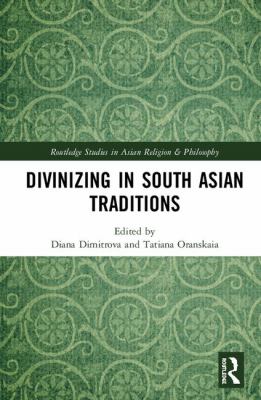
The issue of divinizing in South Asian traditions has not been examined before as a process involving various methods to affect the socio-cultural cognition of the community. It is therefore essential to consider the context of
"divinizing" and to analyse what groups, institutions or individuals define the discourse, what are the ideological positions that they represent, and who or what is being divinized. This book deals with the issue of divinizing in South Asian traditions. It aims at studying cultural questions related to the representations and the mythologizing of the divine. It also explores the human relations to the
"divine other." It studies the interpretations of the divine in religious texts and the embodiment of the
"divine other" in ritual practices. The focus is on studying the phenomenon of divinizing in its religious, cultural, and ideological implications. The book comprises eight chapters that explore the question of divinizing from the 2nd century CE up to present-day in North and South India. The chapters discuss the issue both from insider and outsider perspectives, within the framework of textual study as well as ideological and anthropological analysis. All articles explore various aspects of the cultural phenomenon of being in relation to the divine other, of the process of interpreting and embodying the divine, and of the representation of the divinizing process, as revealed in the literatures and cultures of South Asia. Applying theoretical models of religious and cultural studies to discuss texts written in South Asian languages and engage in critical dialogue with current scholarship, this book is an indispensable study of literary, religious and cultural production in South Asia. It will be of interest to academics in the fields of South Asian studies, Asian Studies, religious and cultural studies as well as comparative religion.
| Condition | Price | |||
|---|---|---|---|---|
|
eBook Obtain a digital book from our friends at eBooks.com.
|
{{ebooksDotComPrice}} {{ebooksDotComCurrency}} | eBooks.com | Digital edition from eBooks.com | |
|
Audio Book Obtain a digital book from our friends at AudiobooksNow.com.
|
{{audioBooksNowPrice}} {{audioBooksNowCurrency}} | AudiobooksNow.com | Digital edition from AudiobooksNow.com |
| Find at your local library from our friends at WorldCat | Find Libraries |
The issue of divinizing in South Asian traditions has not been examined before as a process involving various methods to affect the socio-cultural cognition of the community. It is therefore essential to consider the context of"divinizing" and to ana ...
Read full overview
The issue of divinizing in South Asian traditions has not been examined before as a process involving various methods to affect the socio-cultural cognition of the community. It is therefore essential to consider the context of
"divinizing" and to analyse what groups, institutions or individuals define the discourse, what are the ideological positions that they represent, and who or what is being divinized. This book deals with the issue of divinizing in South Asian traditions. It aims at studying cultural questions related to the representations and the mythologizing of the divine. It also explores the human relations to the
"divine other." It studies the interpretations of the divine in religious texts and the embodiment of the
"divine other" in ritual practices. The focus is on studying the phenomenon of divinizing in its religious, cultural, and ideological implications. The book comprises eight chapters that explore the question of divinizing from the 2nd century CE up to present-day in North and South India. The chapters discuss the issue both from insider and outsider perspectives, within the framework of textual study as well as ideological and anthropological analysis. All articles explore various aspects of the cultural phenomenon of being in relation to the divine other, of the process of interpreting and embodying the divine, and of the representation of the divinizing process, as revealed in the literatures and cultures of South Asia. Applying theoretical models of religious and cultural studies to discuss texts written in South Asian languages and engage in critical dialogue with current scholarship, this book is an indispensable study of literary, religious and cultural production in South Asia. It will be of interest to academics in the fields of South Asian studies, Asian Studies, religious and cultural studies as well as comparative religion.
| Condition | Source | Price | |
|---|---|---|---|
|
eBook Obtain a digital book from our friends at eBooks.com.
|
Digital edition from eBooks.com | {{ebooksDotComPrice}} {{ebooksDotComCurrency}} | eBooks.com |
|
Audio Book Obtain a digital book from our friends at AudiobooksNow.com.
|
|
{{audioBooksNowPrice}} {{audioBooksNowCurrency}} | Audiobook |
*This is a limited preview of the contents of this book and does not directly represent the item available for sale.*
You are now leaving the Better World Books website to complete your transaction. Your eBook download will be facilitated by our friends at eBooks.com. Thank you for your support and for shopping with Better World Books!
You are now leaving the Better World Books website to complete your transaction. Your audio book download will be facilitated by our friends at AudiobooksNow.com. Thank you for your support and for shopping with Better World Books!
You are now leaving the Better World Books website. Thank you for your support and for shopping with Better World Books!