
- Track every order
- Save books to your wishlist
- Earn rewards on every order
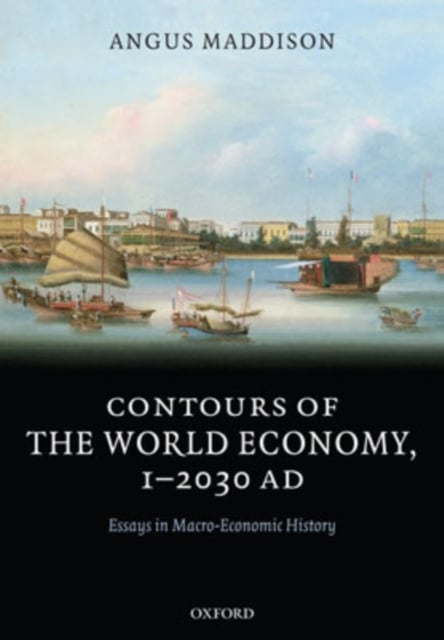
Contours of the World Economy 1-2030 AD : Essays in Macro-Economic History
Hardcover
- Other Available Editions
Contours of the World Economy 1-2030 AD : Essays in Macro-Economic History
Hardcover
- Other Available Editions
- All Available Copies
- Overview
- About the Author
- Awards
- Professional Reviews
- Reader Reviews
- Table Of Contents
- Borrow
Overview
This book seeks to identify the forces which explain how and why some parts of the world have grown rich and others have lagged behind. Encompassing 2000 years of history, part 1 begins with the Roman Empire and explores the key factors that have influenced economic development in Africa, Asia, the Americas and Europe. Part 2 covers the development of macroeconomic tools of analysis from the 17th century to the present. Part 3 looks to the future and considers what the shape of the world economy might be in 2030. Combining both the close quantitative analysis for which Professor Maddison is famous with a more qualitative approach that takes into account the complexity of the forces at work, this book provides students and all interested readers with a totally fascinating overview of world economic history. Professor Maddison has the unique ability to synthesise vast amounts of information into a clear narrative flow that entertains as well as informs, making this text an invaluable resource for all students and scholars, and anyone interested in trying to understand why some parts of the World are so much richer than others.
Categories
All Available Copies Find out more about shipping times from these sellers.
| Condition | Price | |||
|---|---|---|---|---|
|
eBook Obtain a digital book from our friends at eBooks.com.
|
{{ebooksDotComPrice}} {{ebooksDotComCurrency}} | eBooks.com | Digital edition from eBooks.com | |
|
Audio Book Obtain a digital book from our friends at AudiobooksNow.com.
|
{{audioBooksNowPrice}} {{audioBooksNowCurrency}} | AudiobooksNow.com | Digital edition from AudiobooksNow.com |
Professional Reviews
Table Of Contents
| List of Figures | p. viii |
| List of Tables | p. ix |
| List of Boxes | p. xiii |
| Acknowledgements | p. xiv |
| Introduction and Summary | p. 1 |
| The Contours of World Development | p. 2 |
| The History of Macro-Measurement | p. 5 |
| The Shape of Things to Come | p. 6 |
| Contours of World Development, 1-2003AD | |
| The Roman Empire and its Economy | p. 11 |
| Introduction | p. 11 |
| Key Characteristics Accounting for Roman Success in Empire Building | p. 13 |
| Conquest of the Italian Peninsula, 396-191BC | p. 17 |
| The Empire Building Process | p. 18 |
| The Disintegration of the Empire | p. 30 |
| Roman Demography | p. 32 |
| Roman Income | p. 43 |
| Endnotes | p. 60 |
| Bibliography | p. 62 |
| The Resurrection of Western Europe and the Transformation of the Americas | p. 69 |
| Why and When did the West Get Rich? | p. 69 |
| The Driving Forces that Explain the Acceleration in Western Growth since 1820 | p. 73 |
| Changes in the Structure of Demand and Employment | p. 74 |
| The European Transformation of the Americas, 1500-1820 | p. 87 |
| Endnotes | p. 105 |
| References | p. 108 |
| The Interaction Between Asia and the West, 1500-2003 | p. 111 |
| European-Asian Interaction from 1500 to 1820 | p. 112 |
| The Impact of Asian Trade on Europe, 1500-1820 | p. 115 |
| The Impact of Europe on Asia, 1500-1820 | p. 116 |
| Endnotes | p. 178 |
| References | p. 179 |
| The Impact of Islam and Europe on African Development: 1-2003AD | p. 183 |
| Introduction | p. 183 |
| The European Impact on North Africa Before the Seventh Century | p. 185 |
| The Islamic Conquest and its Implications | p. 188 |
| Egypt as an Islamic State | p. 193 |
| The Maghreb and the Initiation of Trans-Saharan Trade in Gold and Slaves | p. 206 |
| The Changing Character of Moroccan Dynasties and their Interaction with Europe and Black Africa | p. 209 |
| Black Africa and the Impact of Islam | p. 214 |
| The European Encounter with Africa | p. 217 |
| Africa from 1820 to 1960 | p. 227 |
| Post-Colonial Africa, 1960 Onwards | p. 231 |
| Appendix: The Crusades 1096-1270 | p. 237 |
| Endnotes | p. 239 |
| References | p. 240 |
| Advances in Macro-Measurement Since 1665 | |
| Political Arithmeticians and Historical Demographers: The Pioneers of Macro-Measurement | p. 249 |
| William Petty (1623-87) | p. 250 |
| John Graunt: The First Demographer (1620-74) | p. 256 |
| Gregory King (1648-1712) and Charles Davenant (1656-1714) | p. 258 |
| Patrick Colquhoun (1745-1820) | p. 282 |
| French Political Arithmetic, 1695-1707 | p. 284 |
| Macro-Measurement in the Nineteenth and First Half of the Twentieth Century | p. 287 |
| Bibliography | p. 288 |
| Modern Macro-Measurement: How Far Have We Come? | p. 294 |
| Development of Macro-Measurement as a Tool of Economic Policy since 1950 | p. 295 |
| Quantifying and Interpreting World Economic Growth from 1820 Onwards | p. 301 |
| Economic Performance in the Merchant Capitalist Epoch: 1500-1820 | p. 307 |
| The Roots of Modernity: 'Takeoff' or Long Apprenticeship | p. 315 |
| Appendices | p. 316 |
| Endnotes | p. 321 |
| Bibliography | p. 323 |
| The Shape of Things to Come | |
| The World Economy in 2030 | p. 335 |
| Projections of Population and Changes in Demographic Characteristics | p. 335 |
| Assumptions Underlying the Projections of Per Capita GDP | p. 338 |
| The Relationship Between Economic Growth, Energy Consumption, Carbon Emissions, and Global Warming | p. 347 |
| The Impact of Climate Change | p. 360 |
| The Kyoto Protocol | p. 362 |
| The Report of the House of Lords on Climate Change | p. 362 |
| The Stern Review of the Economics of Climate Change | p. 363 |
| Conclusions on Global Warming | p. 366 |
| Appendix | p. 367 |
| Endnotes | p. 369 |
| Bibliography | p. 370 |
| Appendices | |
| Statistical Appendix A | p. 375 |
| Statistical Appendix B: Ingredients of Growth Accounts in Japan, UK, and USA, 1820-2003 | p. 384 |
| Index | p. 387 |
| Table of Contents provided by Ingram. All Rights Reserved. |
| Find at your local library from our friends at WorldCat | Find Libraries |
Overview
This book seeks to identify the forces which explain how and why some parts of the world have grown rich and others have lagged behind. Encompassing 2000 years of history, part 1 begins with the Roman Empire and explores the key factors that have inf ...
Read full overview
Overview
This book seeks to identify the forces which explain how and why some parts of the world have grown rich and others have lagged behind. Encompassing 2000 years of history, part 1 begins with the Roman Empire and explores the key factors that have influenced economic development in Africa, Asia, the Americas and Europe. Part 2 covers the development of macroeconomic tools of analysis from the 17th century to the present. Part 3 looks to the future and considers what the shape of the world economy might be in 2030. Combining both the close quantitative analysis for which Professor Maddison is famous with a more qualitative approach that takes into account the complexity of the forces at work, this book provides students and all interested readers with a totally fascinating overview of world economic history. Professor Maddison has the unique ability to synthesise vast amounts of information into a clear narrative flow that entertains as well as informs, making this text an invaluable resource for all students and scholars, and anyone interested in trying to understand why some parts of the World are so much richer than others.
Product Details
Professional Reviews
Table Of Contents
| List of Figures | p. viii |
| List of Tables | p. ix |
| List of Boxes | p. xiii |
| Acknowledgements | p. xiv |
| Introduction and Summary | p. 1 |
| The Contours of World Development | p. 2 |
| The History of Macro-Measurement | p. 5 |
| The Shape of Things to Come | p. 6 |
| Contours of World Development, 1-2003AD | |
| The Roman Empire and its Economy | p. 11 |
| Introduction | p. 11 |
| Key Characteristics Accounting for Roman Success in Empire Building | p. 13 |
| Conquest of the Italian Peninsula, 396-191BC | p. 17 |
| The Empire Building Process | p. 18 |
| The Disintegration of the Empire | p. 30 |
| Roman Demography | p. 32 |
| Roman Income | p. 43 |
| Endnotes | p. 60 |
| Bibliography | p. 62 |
| The Resurrection of Western Europe and the Transformation of the Americas | p. 69 |
| Why and When did the West Get Rich? | p. 69 |
| The Driving Forces that Explain the Acceleration in Western Growth since 1820 | p. 73 |
| Changes in the Structure of Demand and Employment | p. 74 |
| The European Transformation of the Americas, 1500-1820 | p. 87 |
| Endnotes | p. 105 |
| References | p. 108 |
| The Interaction Between Asia and the West, 1500-2003 | p. 111 |
| European-Asian Interaction from 1500 to 1820 | p. 112 |
| The Impact of Asian Trade on Europe, 1500-1820 | p. 115 |
| The Impact of Europe on Asia, 1500-1820 | p. 116 |
| Endnotes | p. 178 |
| References | p. 179 |
| The Impact of Islam and Europe on African Development: 1-2003AD | p. 183 |
| Introduction | p. 183 |
| The European Impact on North Africa Before the Seventh Century | p. 185 |
| The Islamic Conquest and its Implications | p. 188 |
| Egypt as an Islamic State | p. 193 |
| The Maghreb and the Initiation of Trans-Saharan Trade in Gold and Slaves | p. 206 |
| The Changing Character of Moroccan Dynasties and their Interaction with Europe and Black Africa | p. 209 |
| Black Africa and the Impact of Islam | p. 214 |
| The European Encounter with Africa | p. 217 |
| Africa from 1820 to 1960 | p. 227 |
| Post-Colonial Africa, 1960 Onwards | p. 231 |
| Appendix: The Crusades 1096-1270 | p. 237 |
| Endnotes | p. 239 |
| References | p. 240 |
| Advances in Macro-Measurement Since 1665 | |
| Political Arithmeticians and Historical Demographers: The Pioneers of Macro-Measurement | p. 249 |
| William Petty (1623-87) | p. 250 |
| John Graunt: The First Demographer (1620-74) | p. 256 |
| Gregory King (1648-1712) and Charles Davenant (1656-1714) | p. 258 |
| Patrick Colquhoun (1745-1820) | p. 282 |
| French Political Arithmetic, 1695-1707 | p. 284 |
| Macro-Measurement in the Nineteenth and First Half of the Twentieth Century | p. 287 |
| Bibliography | p. 288 |
| Modern Macro-Measurement: How Far Have We Come? | p. 294 |
| Development of Macro-Measurement as a Tool of Economic Policy since 1950 | p. 295 |
| Quantifying and Interpreting World Economic Growth from 1820 Onwards | p. 301 |
| Economic Performance in the Merchant Capitalist Epoch: 1500-1820 | p. 307 |
| The Roots of Modernity: 'Takeoff' or Long Apprenticeship | p. 315 |
| Appendices | p. 316 |
| Endnotes | p. 321 |
| Bibliography | p. 323 |
| The Shape of Things to Come | |
| The World Economy in 2030 | p. 335 |
| Projections of Population and Changes in Demographic Characteristics | p. 335 |
| Assumptions Underlying the Projections of Per Capita GDP | p. 338 |
| The Relationship Between Economic Growth, Energy Consumption, Carbon Emissions, and Global Warming | p. 347 |
| The Impact of Climate Change | p. 360 |
| The Kyoto Protocol | p. 362 |
| The Report of the House of Lords on Climate Change | p. 362 |
| The Stern Review of the Economics of Climate Change | p. 363 |
| Conclusions on Global Warming | p. 366 |
| Appendix | p. 367 |
| Endnotes | p. 369 |
| Bibliography | p. 370 |
| Appendices | |
| Statistical Appendix A | p. 375 |
| Statistical Appendix B: Ingredients of Growth Accounts in Japan, UK, and USA, 1820-2003 | p. 384 |
| Index | p. 387 |
| Table of Contents provided by Ingram. All Rights Reserved. |
Borrow
All Available Copies
| Condition | Source | Price | |
|---|---|---|---|
|
eBook Obtain a digital book from our friends at eBooks.com.
|
Digital edition from eBooks.com | {{ebooksDotComPrice}} {{ebooksDotComCurrency}} | eBooks.com |
|
Audio Book Obtain a digital book from our friends at AudiobooksNow.com.
|
|
{{audioBooksNowPrice}} {{audioBooksNowCurrency}} | Audiobook |
Limited Preview for 'Contours of the World Economy 1-2030 AD : Essays in Macro-Economic History' provided by Archive.org
*This is a limited preview of the contents of this book and does not directly represent the item available for sale.*
A preview for 'Contours of the World Economy 1-2030 AD : Essays in Macro-Economic History' is unavailable.
You are now leaving the Better World Books website to complete your transaction. Your eBook download will be facilitated by our friends at eBooks.com. Thank you for your support and for shopping with Better World Books!
You are now leaving the Better World Books website to complete your transaction. Your audio book download will be facilitated by our friends at AudiobooksNow.com. Thank you for your support and for shopping with Better World Books!
You are now leaving the Better World Books website. Thank you for your support and for shopping with Better World Books!