
- Track every order
- Save books to your wishlist
- Earn rewards on every order
- All Available Copies
- Overview
- About the Author
- Awards
- Professional Reviews
- Reader Reviews
- Table Of Contents
- Borrow
Overview
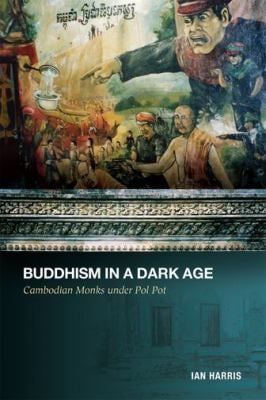
This pioneering study of the fate of Buddhism during the communist period in Cambodia puts a human face on a dark period in Cambodia's history. It is the first sustained analysis of the widely held assumption that the Khmer Rouge under Pol Pot had a centralized plan to liquidate the entire monastic order. Based on a thorough analysis of interview transcripts and a large body of contemporary manuscript material, it offers a nuanced view that attempts to move beyond the horrific monastic death toll and fully evaluate the damage to the Buddhist sangha under Democratic Kampuchea. Compelling evidence exists to suggest that Khmer Rouge leaders were determined to hunt down senior members of the pre-1975 ecclesiastical hierarchy, but other factors also worked against the Buddhist order. Buddhism in a Dark Age outlines a three-phase process in the Khmer Rouge treatment of Buddhism: bureaucratic interference and obstruction, explicit harassment, and finally the elimination of the obdurate and those close to the previous Lon Nol regime. The establishment of a separate revolutionary form of sangha administration constituted the bureaucratic phase. The harassment of monks, both individually and en masse, was partially due to the uprooting of the traditional monastic economy in which lay people were discouraged from feeding economically unproductive monks. Younger members of the order were disrobed and forced into marriage or military service. The final act in the tragedy of Buddhism under the Khmer Rouge was the execution of those monks and senior ecclesiastics who resisted. It was difficult for institutional Buddhism to survive the conditions encountered during the decade under study here. Prince Sihanouk's overthrow in 1970 marked the end of Buddhism as the central axis around which all other aspects of Cambodian existence revolved and made sense. And under Pol Pot the lay population was strongly discouraged from providing its necessary material support. The book concludes with a discussion of the slow re-establishment and official supervision of the Buddhist order during the People's Republic of Kampuchea period.
Categories
All Available Copies Find out more about shipping times from these sellers.
| Condition | Price | |||
|---|---|---|---|---|
Used Very Good (1 available)

|
$6.23 USD | Add To Cart |
Ships directly from Better World Books
|
|
|
eBook Obtain a digital book from our friends at eBooks.com.
|
{{ebooksDotComPrice}} {{ebooksDotComCurrency}} | eBooks.com | Digital edition from eBooks.com | |
|
Audio Book Obtain a digital book from our friends at AudiobooksNow.com.
|
{{audioBooksNowPrice}} {{audioBooksNowCurrency}} | AudiobooksNow.com | Digital edition from AudiobooksNow.com |
Professional Reviews
Table Of Contents
| Acknowledgments | p. ix |
| Note on Transliteration | p. xi |
| Introduction | p. 1 |
| Unraveling of the Buddhist State | p. 12 |
| Buddhism and the Origins of Cambodian Communism | p. 29 |
| Buddhism and Khmer Communism: A Shared Conceptual Terrain | p. 43 |
| Dealing with Monks | p. 64 |
| Buddhist Practice and Material Culture under the Khmer Rouge | p. 90 |
| Monk Mortality and the Destruction of Institutional Buddhism | p. 118 |
| Aftermath: Rebuilding the Sangha under Socialism | p. 139 |
| Conclusion | p. 168 |
| Notes | p. 173 |
| Abbreviations and Glossary | p. 209 |
| Bibliography | p. 213 |
| Index | p. 239 |
| Table of Contents provided by Ingram. All Rights Reserved. |
| Find at your local library from our friends at WorldCat | Find Libraries |
Overview
This pioneering study of the fate of Buddhism during the communist period in Cambodia puts a human face on a dark period in Cambodia's history. It is the first sustained analysis of the widely held assumption that the Khmer Rouge under Pol Pot had a ...
Read full overview
Overview
This pioneering study of the fate of Buddhism during the communist period in Cambodia puts a human face on a dark period in Cambodia's history. It is the first sustained analysis of the widely held assumption that the Khmer Rouge under Pol Pot had a centralized plan to liquidate the entire monastic order. Based on a thorough analysis of interview transcripts and a large body of contemporary manuscript material, it offers a nuanced view that attempts to move beyond the horrific monastic death toll and fully evaluate the damage to the Buddhist sangha under Democratic Kampuchea. Compelling evidence exists to suggest that Khmer Rouge leaders were determined to hunt down senior members of the pre-1975 ecclesiastical hierarchy, but other factors also worked against the Buddhist order. Buddhism in a Dark Age outlines a three-phase process in the Khmer Rouge treatment of Buddhism: bureaucratic interference and obstruction, explicit harassment, and finally the elimination of the obdurate and those close to the previous Lon Nol regime. The establishment of a separate revolutionary form of sangha administration constituted the bureaucratic phase. The harassment of monks, both individually and en masse, was partially due to the uprooting of the traditional monastic economy in which lay people were discouraged from feeding economically unproductive monks. Younger members of the order were disrobed and forced into marriage or military service. The final act in the tragedy of Buddhism under the Khmer Rouge was the execution of those monks and senior ecclesiastics who resisted. It was difficult for institutional Buddhism to survive the conditions encountered during the decade under study here. Prince Sihanouk's overthrow in 1970 marked the end of Buddhism as the central axis around which all other aspects of Cambodian existence revolved and made sense. And under Pol Pot the lay population was strongly discouraged from providing its necessary material support. The book concludes with a discussion of the slow re-establishment and official supervision of the Buddhist order during the People's Republic of Kampuchea period.
Product Details
Professional Reviews
Table Of Contents
| Acknowledgments | p. ix |
| Note on Transliteration | p. xi |
| Introduction | p. 1 |
| Unraveling of the Buddhist State | p. 12 |
| Buddhism and the Origins of Cambodian Communism | p. 29 |
| Buddhism and Khmer Communism: A Shared Conceptual Terrain | p. 43 |
| Dealing with Monks | p. 64 |
| Buddhist Practice and Material Culture under the Khmer Rouge | p. 90 |
| Monk Mortality and the Destruction of Institutional Buddhism | p. 118 |
| Aftermath: Rebuilding the Sangha under Socialism | p. 139 |
| Conclusion | p. 168 |
| Notes | p. 173 |
| Abbreviations and Glossary | p. 209 |
| Bibliography | p. 213 |
| Index | p. 239 |
| Table of Contents provided by Ingram. All Rights Reserved. |
All Available Copies
| Condition | Source | Price | |
|---|---|---|---|
|
Used Very Good (1 available)
Ships from |
Ships directly from Better World Books
|
$6.23 USD | Add To Cart |
|
eBook Obtain a digital book from our friends at eBooks.com.
|
Digital edition from eBooks.com | {{ebooksDotComPrice}} {{ebooksDotComCurrency}} | eBooks.com |
|
Audio Book Obtain a digital book from our friends at AudiobooksNow.com.
|
|
{{audioBooksNowPrice}} {{audioBooksNowCurrency}} | Audiobook |
Limited Preview for 'Buddhism in a Dark Age : Cambodian Monks under Pol Pot' provided by Archive.org
*This is a limited preview of the contents of this book and does not directly represent the item available for sale.*
A preview for 'Buddhism in a Dark Age : Cambodian Monks under Pol Pot' is unavailable.
You are now leaving the Better World Books website to complete your transaction. Your eBook download will be facilitated by our friends at eBooks.com. Thank you for your support and for shopping with Better World Books!
You are now leaving the Better World Books website to complete your transaction. Your audio book download will be facilitated by our friends at AudiobooksNow.com. Thank you for your support and for shopping with Better World Books!
You are now leaving the Better World Books website. Thank you for your support and for shopping with Better World Books!