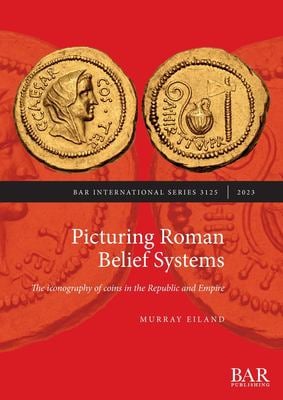
This volume is a visual exploration of Roman belief systems and culture through time, with emphasis on what coins can reveal about Roman society. The text is arranged thematically to encompass the diversity of Roman faiths and how they are mediated by other social forces. Special attention is paid to the deep history of Roman traditions, as well as how these traditions were transmitted to Christianity.The primary method of analysis is the application of semiotics to coin images. Semiosis is any activity, conduct, or process that involves signs. This is where non-coin sources like contemporary literature and other arts are useful. These sources can be trawled to reveal the engraver's intent when creating the images used on coins.Particular focus is given to the Roman imperial cult, which lies at an intersection between politics and religion. With clear Greek antecedents from the cult of the hero, Augustus (r. 27 BC-AD 14) reformed the Roman Republic into a system where the princeps (emperor) was at the pinnacle of power and prestige, and emperors were not shy in expressing their rank using symbols.
| Condition | Price | |||
|---|---|---|---|---|
|
eBook Obtain a digital book from our friends at eBooks.com.
|
{{ebooksDotComPrice}} {{ebooksDotComCurrency}} | eBooks.com | Digital edition from eBooks.com | |
|
Audio Book Obtain a digital book from our friends at AudiobooksNow.com.
|
{{audioBooksNowPrice}} {{audioBooksNowCurrency}} | AudiobooksNow.com | Digital edition from AudiobooksNow.com |
| Find at your local library from our friends at WorldCat | Find Libraries |
This volume is a visual exploration of Roman belief systems and culture through time, with emphasis on what coins can reveal about Roman society. The text is arranged thematically to encompass the diversity of Roman faiths and how they are mediated b ...
Read full overview
This volume is a visual exploration of Roman belief systems and culture through time, with emphasis on what coins can reveal about Roman society. The text is arranged thematically to encompass the diversity of Roman faiths and how they are mediated by other social forces. Special attention is paid to the deep history of Roman traditions, as well as how these traditions were transmitted to Christianity.The primary method of analysis is the application of semiotics to coin images. Semiosis is any activity, conduct, or process that involves signs. This is where non-coin sources like contemporary literature and other arts are useful. These sources can be trawled to reveal the engraver's intent when creating the images used on coins.Particular focus is given to the Roman imperial cult, which lies at an intersection between politics and religion. With clear Greek antecedents from the cult of the hero, Augustus (r. 27 BC-AD 14) reformed the Roman Republic into a system where the princeps (emperor) was at the pinnacle of power and prestige, and emperors were not shy in expressing their rank using symbols.
| Condition | Source | Price | |
|---|---|---|---|
|
eBook Obtain a digital book from our friends at eBooks.com.
|
Digital edition from eBooks.com | {{ebooksDotComPrice}} {{ebooksDotComCurrency}} | eBooks.com |
|
Audio Book Obtain a digital book from our friends at AudiobooksNow.com.
|
|
{{audioBooksNowPrice}} {{audioBooksNowCurrency}} | Audiobook |
*This is a limited preview of the contents of this book and does not directly represent the item available for sale.*
You are now leaving the Better World Books website to complete your transaction. Your eBook download will be facilitated by our friends at eBooks.com. Thank you for your support and for shopping with Better World Books!
You are now leaving the Better World Books website to complete your transaction. Your audio book download will be facilitated by our friends at AudiobooksNow.com. Thank you for your support and for shopping with Better World Books!
You are now leaving the Better World Books website. Thank you for your support and for shopping with Better World Books!