
- Track every order
- Save books to your wishlist
- Earn rewards on every order
- All Available Copies
- Overview
- About the Author
- Awards
- Professional Reviews
- Reader Reviews
- Table Of Contents
- Borrow
Overview
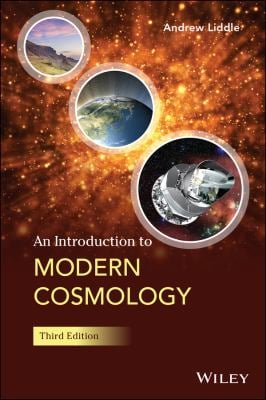
An Introduction to Modern Cosmology Third Edition is an accessible account of modern cosmological ideas. The Big Bang Cosmology is explored, looking at its observational successes in explaining the expansion of the Universe, the existence and properties of the cosmic microwave background, and the origin of light elements in the universe. Properties of the very early Universe are also covered, including the motivation for a rapid period of expansion known as cosmological inflation. The third edition brings this established undergraduate textbook up-to-date with the rapidly evolving observational situation. This fully revised edition of a bestseller takes an approach which is grounded in physics with a logical flow of chapters leading the reader from basic ideas of the expansion described by the Friedman equations to some of the more advanced ideas about the early universe. It also incorporates up-to-date results from the Planck mission, which imaged the anisotropies of the Cosmic Microwave Background radiation over the whole sky. The Advanced Topic sections present subjects with more detailed mathematical approaches to give greater depth to discussions. Student problems with hints for solving them and numerical answers are embedded in the chapters to facilitate the reader's understanding and learning. Cosmology is now part of the core in many degree programs. This current, clear and concise introductory text is relevant to a wide range of astronomy programs worldwide and is essential reading for undergraduates and Masters students, as well as anyone starting research in cosmology.
Categories
All Available Copies Find out more about shipping times from these sellers.
| Condition | Price | |||
|---|---|---|---|---|
|
eBook Obtain a digital book from our friends at eBooks.com.
|
{{ebooksDotComPrice}} {{ebooksDotComCurrency}} | eBooks.com | Digital edition from eBooks.com | |
|
Audio Book Obtain a digital book from our friends at AudiobooksNow.com.
|
{{audioBooksNowPrice}} {{audioBooksNowCurrency}} | AudiobooksNow.com | Digital edition from AudiobooksNow.com |
Table Of Contents
| Preface | p. xi |
| Constants, conversion factors and symbols | p. xiv |
| A (Very)Brief History of Cosmological Ideas | p. 1 |
| Observational Overview | p. 3 |
| In visible light | p. 3 |
| In Other wavebands | p. 6 |
| Homogeneity and isotropy | p. 10 |
| The expansion of the Universe | p. 10 |
| Particles in the Universe | p. 13 |
| What particles are there? | p. 13 |
| Thermal distributions and the black-body spectrum | p. 15 |
| Newtonian Gravity | p. 21 |
| The Friedmann equation | p. 22 |
| On the meaning of the expansion | p. 25 |
| Things that go faster than light | p. 25 |
| The fluid equation | p. 26 |
| The acceleration equation | p. 27 |
| On mass, energy and vanishing factors of c2 | p. 28 |
| The Geometry of the Universe | p. 29 |
| Flat geometry | p. 29 |
| Spherical geometry | p. 30 |
| Hyperbolic geometry | p. 32 |
| Infinite and observable universes | p. 33 |
| Where did the Big Bang happen? | p. 33 |
| Three values of k | p. 34 |
| Simple Cosmological Models | p. 37 |
| Hubble's law | p. 37 |
| Expansion and redshift | p. 38 |
| Solving the equations | p. 39 |
| Matter | p. 40 |
| Radiation | p. 41 |
| Mixtures | p. 42 |
| Particle number densities | p. 43 |
| Evolution including curvature | p. 44 |
| Observational Parameters | p. 49 |
| The expansion rate H0 | p. 49 |
| The density parameter ¿0 | p. 51 |
| The deceleration parameter q0 | p. 52 |
| The Cosmological Constant | p. 55 |
| Introducing ¿ | p. 55 |
| Fluid description of ¿ | p. 56 |
| Cosmological models with ¿ | p. 57 |
| The Age of the Universe | p. 61 |
| The Density of the Universe and Dark Matter | p. 67 |
| Weighing the Universe | p. 67 |
| Counting stars | p. 67 |
| Nucleosynthesis forehadowed | p. 68 |
| Galaxy cluster composition | p. 70 |
| Galaxy cluster composition | p. 71 |
| The formation of structre | p. 71 |
| The geometry of the Universe and the brightness of supernovae | p. 72 |
| Overview | p. 72 |
| What might the dark matter be? | p. 73 |
| Fundamental particles | p. 73 |
| Compact objects | p. 74 |
| Dark matter searches | p. 74 |
| The Cosmic Microwave Background | p. 77 |
| Properties of the microwave background | p. 77 |
| The photon to baryon ratio | p. 79 |
| The origin of the microwave background | p. 80 |
| The orgin of the microwave background (advanced) | p. 83 |
| The Early Universe | p. 87 |
| Nucleosynthesis: The Origin of the Light Elements | p. 93 |
| Hydrogen and helium | p. 93 |
| Comparing with observations | p. 96 |
| Contrasting decoupling and nuclesynthesis | p. 98 |
| The Inflationary Universe | p. 101 |
| Problems with the Hot Big Bang | p. 101 |
| The flatness problem | p. 101 |
| The horizon problem | p. 103 |
| Relic particle abundances | p. 104 |
| Inflationary expansion | p. 105 |
| Solving the Big Bang problems | p. 106 |
| The flatness problem | p. 106 |
| The horizon problems | p. 107 |
| Relic particle abundances | p. 108 |
| How much inflation? | p. 108 |
| Inflation and particle physics | p. 109 |
| The Initial Singularity | p. 113 |
| Overview: The Standard Cosmological Model | p. 117 |
| General Relativistic Cosmology | p. 121 |
| The metric of space-time | p. 121 |
| The Einstein equations | p. 122 |
| Aside: Topology of the Universe | p. 124 |
| Classic Cosmology: Distances and Luminosities | p. 127 |
| Light propagation and redshift | p. 127 |
| The observable Universe | p. 130 |
| Luminosity distance | p. 130 |
| Angular diameter distance | p. 134 |
| Source counts | p. 136 |
| Neutrino Cosmology | p. 139 |
| The massless case | p. 139 |
| Massive neutrinos | p. 141 |
| Light neutrinos | p. 141 |
| Heavy neutrinos | p. 142 |
| Neutrinos and structure formation | p. 142 |
| Baryogenesis | p. 145 |
| Stractures in the Universe | p. 149 |
| The observed structures | p. 149 |
| Gravitational instability | p. 151 |
| The clustering of galaxies | p. 152 |
| Cosmic microwave background anisotropies | p. 154 |
| Statistical description of anisotropies | p. 154 |
| Computing the Cl | p. 156 |
| Microwave background observations | p. 156 |
| Spatial geometry | p. 158 |
| The origin of structure | p. 159 |
| Constraining cosmological models | p. 163 |
| Cosmological models and parameters | p. 163 |
| Key cosmological observations | p. 164 |
| Cosmological data analysis | p. 164 |
| The Standerd Cosmological Model: 2014 edition | p. 166 |
| The future | p. 168 |
| Bibliography | p. 171 |
| Numerical Answers and Hints to Problems | p. 173 |
| Index | p. 177 |
| Table of Contents provided by Ingram. All Rights Reserved. |
| Find at your local library from our friends at WorldCat | Find Libraries |
Overview
An Introduction to Modern Cosmology Third Edition is an accessible account of modern cosmological ideas. The Big Bang Cosmology is explored, looking at its observational successes in explaining the expansion of the Universe, the existence and propert ...
Read full overview
Overview
An Introduction to Modern Cosmology Third Edition is an accessible account of modern cosmological ideas. The Big Bang Cosmology is explored, looking at its observational successes in explaining the expansion of the Universe, the existence and properties of the cosmic microwave background, and the origin of light elements in the universe. Properties of the very early Universe are also covered, including the motivation for a rapid period of expansion known as cosmological inflation. The third edition brings this established undergraduate textbook up-to-date with the rapidly evolving observational situation. This fully revised edition of a bestseller takes an approach which is grounded in physics with a logical flow of chapters leading the reader from basic ideas of the expansion described by the Friedman equations to some of the more advanced ideas about the early universe. It also incorporates up-to-date results from the Planck mission, which imaged the anisotropies of the Cosmic Microwave Background radiation over the whole sky. The Advanced Topic sections present subjects with more detailed mathematical approaches to give greater depth to discussions. Student problems with hints for solving them and numerical answers are embedded in the chapters to facilitate the reader's understanding and learning. Cosmology is now part of the core in many degree programs. This current, clear and concise introductory text is relevant to a wide range of astronomy programs worldwide and is essential reading for undergraduates and Masters students, as well as anyone starting research in cosmology.
Product Details
Table Of Contents
| Preface | p. xi |
| Constants, conversion factors and symbols | p. xiv |
| A (Very)Brief History of Cosmological Ideas | p. 1 |
| Observational Overview | p. 3 |
| In visible light | p. 3 |
| In Other wavebands | p. 6 |
| Homogeneity and isotropy | p. 10 |
| The expansion of the Universe | p. 10 |
| Particles in the Universe | p. 13 |
| What particles are there? | p. 13 |
| Thermal distributions and the black-body spectrum | p. 15 |
| Newtonian Gravity | p. 21 |
| The Friedmann equation | p. 22 |
| On the meaning of the expansion | p. 25 |
| Things that go faster than light | p. 25 |
| The fluid equation | p. 26 |
| The acceleration equation | p. 27 |
| On mass, energy and vanishing factors of c2 | p. 28 |
| The Geometry of the Universe | p. 29 |
| Flat geometry | p. 29 |
| Spherical geometry | p. 30 |
| Hyperbolic geometry | p. 32 |
| Infinite and observable universes | p. 33 |
| Where did the Big Bang happen? | p. 33 |
| Three values of k | p. 34 |
| Simple Cosmological Models | p. 37 |
| Hubble's law | p. 37 |
| Expansion and redshift | p. 38 |
| Solving the equations | p. 39 |
| Matter | p. 40 |
| Radiation | p. 41 |
| Mixtures | p. 42 |
| Particle number densities | p. 43 |
| Evolution including curvature | p. 44 |
| Observational Parameters | p. 49 |
| The expansion rate H0 | p. 49 |
| The density parameter ¿0 | p. 51 |
| The deceleration parameter q0 | p. 52 |
| The Cosmological Constant | p. 55 |
| Introducing ¿ | p. 55 |
| Fluid description of ¿ | p. 56 |
| Cosmological models with ¿ | p. 57 |
| The Age of the Universe | p. 61 |
| The Density of the Universe and Dark Matter | p. 67 |
| Weighing the Universe | p. 67 |
| Counting stars | p. 67 |
| Nucleosynthesis forehadowed | p. 68 |
| Galaxy cluster composition | p. 70 |
| Galaxy cluster composition | p. 71 |
| The formation of structre | p. 71 |
| The geometry of the Universe and the brightness of supernovae | p. 72 |
| Overview | p. 72 |
| What might the dark matter be? | p. 73 |
| Fundamental particles | p. 73 |
| Compact objects | p. 74 |
| Dark matter searches | p. 74 |
| The Cosmic Microwave Background | p. 77 |
| Properties of the microwave background | p. 77 |
| The photon to baryon ratio | p. 79 |
| The origin of the microwave background | p. 80 |
| The orgin of the microwave background (advanced) | p. 83 |
| The Early Universe | p. 87 |
| Nucleosynthesis: The Origin of the Light Elements | p. 93 |
| Hydrogen and helium | p. 93 |
| Comparing with observations | p. 96 |
| Contrasting decoupling and nuclesynthesis | p. 98 |
| The Inflationary Universe | p. 101 |
| Problems with the Hot Big Bang | p. 101 |
| The flatness problem | p. 101 |
| The horizon problem | p. 103 |
| Relic particle abundances | p. 104 |
| Inflationary expansion | p. 105 |
| Solving the Big Bang problems | p. 106 |
| The flatness problem | p. 106 |
| The horizon problems | p. 107 |
| Relic particle abundances | p. 108 |
| How much inflation? | p. 108 |
| Inflation and particle physics | p. 109 |
| The Initial Singularity | p. 113 |
| Overview: The Standard Cosmological Model | p. 117 |
| General Relativistic Cosmology | p. 121 |
| The metric of space-time | p. 121 |
| The Einstein equations | p. 122 |
| Aside: Topology of the Universe | p. 124 |
| Classic Cosmology: Distances and Luminosities | p. 127 |
| Light propagation and redshift | p. 127 |
| The observable Universe | p. 130 |
| Luminosity distance | p. 130 |
| Angular diameter distance | p. 134 |
| Source counts | p. 136 |
| Neutrino Cosmology | p. 139 |
| The massless case | p. 139 |
| Massive neutrinos | p. 141 |
| Light neutrinos | p. 141 |
| Heavy neutrinos | p. 142 |
| Neutrinos and structure formation | p. 142 |
| Baryogenesis | p. 145 |
| Stractures in the Universe | p. 149 |
| The observed structures | p. 149 |
| Gravitational instability | p. 151 |
| The clustering of galaxies | p. 152 |
| Cosmic microwave background anisotropies | p. 154 |
| Statistical description of anisotropies | p. 154 |
| Computing the Cl | p. 156 |
| Microwave background observations | p. 156 |
| Spatial geometry | p. 158 |
| The origin of structure | p. 159 |
| Constraining cosmological models | p. 163 |
| Cosmological models and parameters | p. 163 |
| Key cosmological observations | p. 164 |
| Cosmological data analysis | p. 164 |
| The Standerd Cosmological Model: 2014 edition | p. 166 |
| The future | p. 168 |
| Bibliography | p. 171 |
| Numerical Answers and Hints to Problems | p. 173 |
| Index | p. 177 |
| Table of Contents provided by Ingram. All Rights Reserved. |
All Available Copies
| Condition | Source | Price | |
|---|---|---|---|
|
eBook Obtain a digital book from our friends at eBooks.com.
|
Digital edition from eBooks.com | {{ebooksDotComPrice}} {{ebooksDotComCurrency}} | eBooks.com |
|
Audio Book Obtain a digital book from our friends at AudiobooksNow.com.
|
|
{{audioBooksNowPrice}} {{audioBooksNowCurrency}} | Audiobook |
Limited Preview for 'An Introduction to Modern Cosmology' provided by Archive.org
*This is a limited preview of the contents of this book and does not directly represent the item available for sale.*
A preview for 'An Introduction to Modern Cosmology' is unavailable.
You are now leaving the Better World Books website to complete your transaction. Your eBook download will be facilitated by our friends at eBooks.com. Thank you for your support and for shopping with Better World Books!
You are now leaving the Better World Books website to complete your transaction. Your audio book download will be facilitated by our friends at AudiobooksNow.com. Thank you for your support and for shopping with Better World Books!
You are now leaving the Better World Books website. Thank you for your support and for shopping with Better World Books!