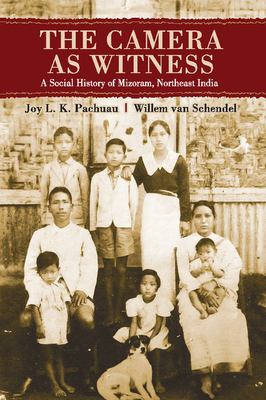
The Camera as Witness lifts the veil off the little known world of Mizoram and challenges - through unpublished photographs -core assumptions in the writing of India's national history. The pictures in the book establish the transformation of this society and the many forms of modernity that have emerged in it. It emphasises how 'indigenous people' in Mizoram used cameras to produce distinct modern identities and represent themselves to themselves, consistently contesting outsiders' imaginations of them as isolated, backward and in need of upliftment. The authors demonstrate how mostly amateur photographers used visual images to document a historical trajectory of heady change and continual reinvention, producing distinct modern identities. By virtue of its use of visual sources and its engagement with a wide range of important discourses, this book is relevant for students, historians, social scientists, political activists and general readers looking for a fresh approach to Northeast India.
| Condition | Price | |||
|---|---|---|---|---|
|
eBook Obtain a digital book from our friends at eBooks.com.
|
{{ebooksDotComPrice}} {{ebooksDotComCurrency}} | eBooks.com | Digital edition from eBooks.com | |
|
Audio Book Obtain a digital book from our friends at AudiobooksNow.com.
|
{{audioBooksNowPrice}} {{audioBooksNowCurrency}} | AudiobooksNow.com | Digital edition from AudiobooksNow.com |
| Find at your local library from our friends at WorldCat | Find Libraries |
The Camera as Witness lifts the veil off the little known world of Mizoram and challenges - through unpublished photographs -core assumptions in the writing of India's national history. The pictures in the book establish the transformation of this so ...
Read full overview
The Camera as Witness lifts the veil off the little known world of Mizoram and challenges - through unpublished photographs -core assumptions in the writing of India's national history. The pictures in the book establish the transformation of this society and the many forms of modernity that have emerged in it. It emphasises how 'indigenous people' in Mizoram used cameras to produce distinct modern identities and represent themselves to themselves, consistently contesting outsiders' imaginations of them as isolated, backward and in need of upliftment. The authors demonstrate how mostly amateur photographers used visual images to document a historical trajectory of heady change and continual reinvention, producing distinct modern identities. By virtue of its use of visual sources and its engagement with a wide range of important discourses, this book is relevant for students, historians, social scientists, political activists and general readers looking for a fresh approach to Northeast India.
| Condition | Source | Price | |
|---|---|---|---|
|
eBook Obtain a digital book from our friends at eBooks.com.
|
Digital edition from eBooks.com | {{ebooksDotComPrice}} {{ebooksDotComCurrency}} | eBooks.com |
|
Audio Book Obtain a digital book from our friends at AudiobooksNow.com.
|
|
{{audioBooksNowPrice}} {{audioBooksNowCurrency}} | Audiobook |
*This is a limited preview of the contents of this book and does not directly represent the item available for sale.*
You are now leaving the Better World Books website to complete your transaction. Your eBook download will be facilitated by our friends at eBooks.com. Thank you for your support and for shopping with Better World Books!
You are now leaving the Better World Books website to complete your transaction. Your audio book download will be facilitated by our friends at AudiobooksNow.com. Thank you for your support and for shopping with Better World Books!
You are now leaving the Better World Books website. Thank you for your support and for shopping with Better World Books!