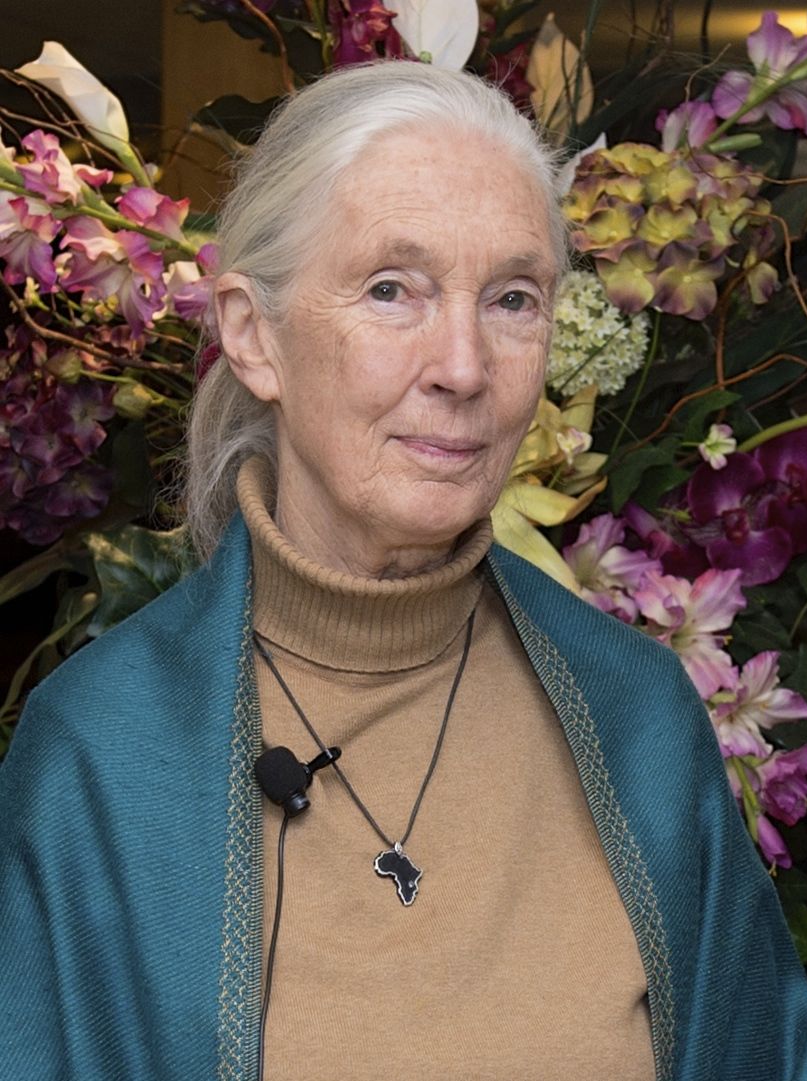
Jane Goodall

Jane Goodall

Dr. Jane Goodall, DBE, is a pioneering primatologist and anthropologist known for her ground-breaking work on chimpanzee behavior in the wild. Gaining global recognition through her detailed observations of chimpanzee social and family interactions, Goodall's books such as In the Shadow of Man and The Chimpanzees of Gombe: Patterns of Behavior have become seminal texts in primatology. Her research shifted the understanding of animal behavior and emphasized the need for conservation, marking her as a profound influence in the scientific community and beyond.

Born on April 3, 1934, in London, England, Jane Goodall ventured to Gombe Stream National Park, Tanzania in 1960 without formal scientific training but armed with an unyielding curiosity about animals, at the urging of paleontologist Louis Leakey. Beyond her scientific pursuits, Goodall emphasizes environmental advocacy, founding the Jane Goodall Institute in 1977 and initiating the Roots & Shoots program in 1991, aimed at inspiring young people to take action for sustainable development. Her personal life, marked by her passion for observing animals and connecting human responsibility to conservation, continues to influence her ongoing work and public engagements.


Born: April 03, 1934
Hometown: London, England

Jane Goodall

Jane Goodall

Dr. Jane Goodall, DBE, is a pioneering primatologist and anthropologist known for her ground-breaking work on chimpanzee behavior in the wild. Gaining global recognition through her detailed observations of chimpanzee social and family interactions, Goodall's books such as In the Shadow of Man and The Chimpanzees of Gombe: Patterns of Behavior have become seminal texts in primatology. Her research shifted the understanding of animal behavior and emphasized the need for conservation, marking her as a profound influence in the scientific community and beyond.

Born on April 3, 1934, in London, England, Jane Goodall ventured to Gombe Stream National Park, Tanzania in 1960 without formal scientific training but armed with an unyielding curiosity about animals, at the urging of paleontologist Louis Leakey. Beyond her scientific pursuits, Goodall emphasizes environmental advocacy, founding the Jane Goodall Institute in 1977 and initiating the Roots & Shoots program in 1991, aimed at inspiring young people to take action for sustainable development. Her personal life, marked by her passion for observing animals and connecting human responsibility to conservation, continues to influence her ongoing work and public engagements.


Born: April 03, 1934
Hometown: London, England

Books by Jane Goodall

{{currentPage+1}}

FAQs

What is Jane Goodall known for?

Jane Goodall is renowned for her extensive study of wild chimpanzees in Tanzania and her contributions to primatology, ethology, and conservation.

Did Jane Goodall receive any academic training in primatology before starting her research?

Jane Goodall began her research without formal academic training in primatology. She was mentored by anthropologist Louis Leakey who believed her unbiased perspective would yield objective observations.

What are some of the major achievements of Jane Goodall?

Jane Goodall's major achievements include her detailed studies of chimpanzee social and familial behaviors, founding the Jane Goodall Institute, and initiating the Roots & Shoots program.

What awards has Jane Goodall received?

Jane Goodall has received numerous awards, including the Kyoto Prize in 1990, the Hubbard Medal, and being named a Dame Commander of the Order of the British Empire (DBE).

How has Jane Goodall contributed to environmental conservation?

Jane Goodall has significantly impacted environmental conservation through her research, advocacy for sustainable ecological practices, and her educational initiatives like the Roots & Shoots program.